
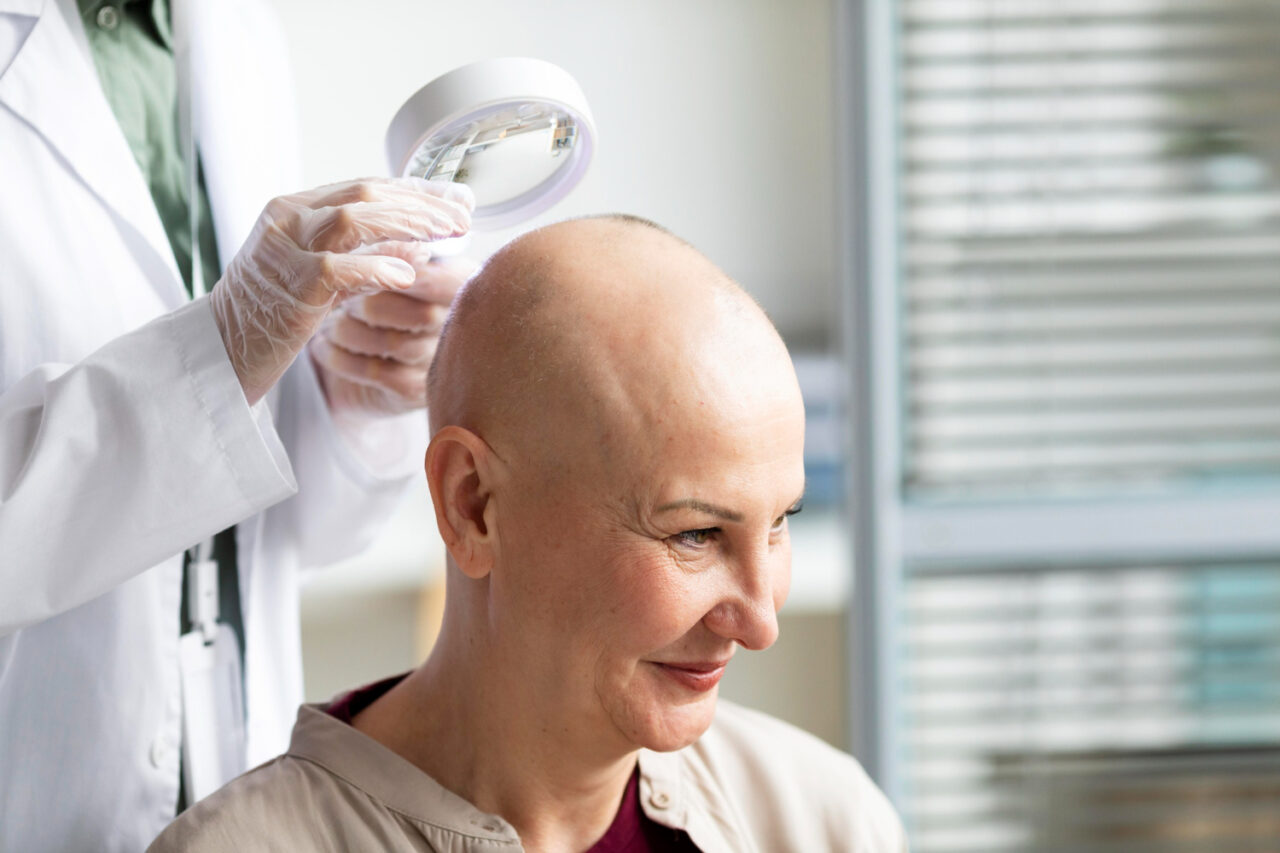
Hair loss is one of the most visible side effects that some patients experience during cancer treatment. For many people, seeing their hair become thinner or fall out can be emotionally difficult and may lead to questions such as “Why does hair loss happen during cancer treatment?”, “Will my hair grow back?” and “Does hair loss mean my treatment is working?”
The important thing to understand is that not every cancer treatment causes hair loss, and not every patient experiences it in the same way. The likelihood and extent of hair loss depend on the specific treatment, medicine, dose, treatment area, and individual response. At Dr. Vikesh Shah’s cancer care practice in Ahmedabad, patients can discuss their treatment plan, possible side effects, and concerns about managing changes such as hair loss with an experienced cancer specialist.
What Is Hair Loss During Cancer Treatment?
Hair loss related to cancer treatment is medically known as alopecia. It can involve thinning or loss of hair from the scalp and, depending on the treatment, other parts of the body.Hair follicles contain cells that grow and divide. Some cancer treatments affect rapidly dividing cells, and certain treatments can therefore also affect cells within the hair follicles. This can interrupt normal hair growth and lead to shedding or thinning.The experience can be different for every patient. Some people may experience noticeable thinning, while others may lose much of their hair.
Why Does Hair Loss Happen During Cancer Treatment?
The main reason depends on the type of cancer treatment being used.
1. Chemotherapy Can Affect Hair Follicles
Chemotherapy works against cancer cells in several ways. Some chemotherapy medicines affect rapidly dividing cells, and hair follicle cells are also among the cells that divide relatively quickly. When certain chemotherapy medicines affect hair follicles, the normal hair-growth process can be disrupted. As a result, patients may experience hair thinning or hair loss. The degree of hair loss is not the same with every chemotherapy medicine. The specific drug, dose, combination of medicines, and treatment schedule all matter.
2. Radiation Therapy Can Cause Hair Loss in the Treated Area
Radiation therapy works differently from chemotherapy. Hair loss associated with radiation generally occurs in the area receiving radiation.For example, when radiation is directed toward the head or scalp, hair in the treated area may be affected. The possibility and extent of hair loss depend on factors such as the treatment area and radiation dose.
3. Targeted Therapy Can Sometimes Affect Hair
Targeted therapies are designed to act on specific features involved in cancer growth. They do not all have the same side effects.Some targeted medicines can cause hair changes, including thinning or changes in hair color or texture. Therefore, patients receiving targeted therapy should ask their cancer specialist about the specific medicine being prescribed.
4. Immunotherapy Can Also Cause Hair Changes
Immunotherapy helps the immune system fight cancer and is used for certain cancers. Like other cancer treatments, immunotherapy can have side effects, and some immunotherapy medicines may be associated with hair loss or thinning. However, hair loss is not an expected effect of every immunotherapy treatment. The specific medicine and individual patient response are important. If you are considering immunotherapy in Ahmedabad, discuss the expected benefits, possible side effects, and suitability of the treatment with your cancer specialist.
5. Hormone Therapy May Cause Hair Thinning
Some hormone therapies used for cancer treatment can cause hair thinning or hair loss. The effect varies according to the medicine and the individual.Because hormone therapy can affect patients differently, your treating specialist can explain the possible side effects associated with your particular treatment.
Does Every Cancer Patient Lose Their Hair?
No.
Hair loss is not an unavoidable part of cancer treatment. Some treatments are more likely to cause hair loss than others, and even patients receiving the same treatment can have different experiences.
Depending on the treatment, a patient may experience:
- No noticeable hair loss
- Mild hair thinning
- Increased hair shedding
- Partial hair loss
- More extensive hair loss
The best way to understand what may happen in your situation is to ask about the specific treatment and medicines included in your cancer treatment plan.
When Does Hair Loss Start During Cancer Treatment?
There is no single timeline that applies to everyone.
With some chemotherapy regimens, hair loss may begin approximately 2 to 3 weeks after the first treatment cycle, although the timing varies according to the chemotherapy being used.
Patients may notice:
- More hair than usual on their pillow
- Hair coming out while washing or brushing
- Gradual thinning
- Hair shedding in larger amounts
Radiation-related hair loss follows a different pattern because it is related to the area being treated.
Which Areas of the Body Can Lose Hair?
Depending on the treatment, hair changes may involve more than the scalp.
Possible areas include:
- Scalp
- Eyebrows
- Eyelashes
- Facial hair
- Arms and legs
- Other areas where hair grows
The extent depends on the treatment being given. Some chemotherapy medicines can affect hair throughout the body, while radiation-related hair loss is generally limited to the treated area.
What Factors Affect Hair Loss During Cancer Treatment?
Type of Treatment
Different cancer treatments have different effects on hair follicles. Chemotherapy, radiation therapy, targeted therapy, immunotherapy, and hormone therapy may affect hair differently.
Specific Medicine: Even within one treatment category, different medicines can have different side-effect profiles. This is why knowing the exact treatment regimen is more useful than assuming that every patient will experience the same hair loss.
Treatment Dose: The amount of a particular treatment can influence the likelihood and severity of hair loss. Your cancer specialist can explain what is expected with your prescribed regimen.
Individual Response: Two people receiving similar cancer treatment may not experience exactly the same degree of hair loss. Individual characteristics and other factors can influence the experience.
Is Hair Loss From Cancer Treatment Permanent?
Often, treatment-related hair loss is temporary, but this is not guaranteed for every patient or every treatment.
After chemotherapy, hair commonly begins to grow again after treatment has ended. The National Cancer Institute notes that hair often begins growing back within 2 to 3 months after chemotherapy, although individual recovery varies. New hair may initially have a different texture or appearance. Radiation therapy can have a different effect. Hair in a treated area may grow back after treatment, but higher radiation doses can sometimes result in thinner or permanent hair loss in that area. Your cancer specialist can give you a more relevant expectation based on your treatment.
Can Hair Loss Be Prevented During Cancer Treatment?
Complete prevention is not always possible. However, some approaches may help reduce or manage treatment-related hair loss.
Scalp Cooling
Scalp cooling, sometimes called a cooling cap, may reduce hair loss associated with certain chemotherapy treatments. It is not suitable for everyone or every chemotherapy regimen, so it should be discussed with the treating cancer team before treatment begins.
Gentle Hair Care
Patients experiencing hair loss may benefit from treating their hair and scalp gently.
The National Cancer Institute recommends measures such as:
- Using a soft-bristled brush or wide-tooth comb
- Avoiding excessive heat
- Being gentle when washing the hair
- Avoiding practices that pull or irritate the scalp
How Can You Manage Hair Loss During Cancer Treatment?
Hair loss can be more than a physical change. It may affect confidence, body image, and emotional wellbeing.
Some patients choose to:
- Wear a wig
- Use a scarf or head covering
- Wear a hat
- Cut their hair shorter
- Let their hair fall naturally without covering it
There is no single right choice. Patients should choose the approach that makes them feel most comfortable.
It can also help to discuss concerns about hair loss with family members and the cancer care team. Support can make it easier to prepare for changes during treatment.
Does Hair Loss Mean Cancer Treatment Is Working?
No. Hair loss should not be used as a measure of whether cancer treatment is working.
Some effective cancer treatments can cause little or no hair loss, while some treatments that cause hair loss may affect hair follicles without providing information about how the cancer is responding.Treatment response is assessed using appropriate methods based on the cancer, treatment, and individual patient. These may include clinical evaluation, imaging, laboratory tests, pathology, or other assessments recommended by the treating team.
When Should You Talk to Your Cancer Specialist?
If hair loss is worrying you, don’t wait until treatment begins to ask about it. Before starting treatment, you can ask:
- Is my treatment likely to cause hair loss?
- How much hair loss might I experience?
- When could hair loss begin?
- Could my eyebrows or eyelashes be affected?
- Is scalp cooling suitable for me?
- How should I care for my scalp?
- When might my hair start growing again?
- Could my treatment cause long-term hair changes?
At Dr. Vikesh Shah’s cancer care practice in Ahmedabad, patients can discuss these concerns as part of their cancer treatment consultation. Understanding the possible side effects of a recommended treatment can help patients and families prepare for the treatment journey.
Understanding Hair Loss During Cancer Treatment
Hair loss can be one of the most noticeable side effects of cancer treatment, but it does not happen to everyone. The likelihood and extent depend on the type of cancer treatment, specific medicines, dose, treatment area, and individual response.Chemotherapy is commonly associated with hair loss because some chemotherapy medicines affect rapidly dividing cells, including cells in hair follicles. Radiation therapy can cause hair loss in the treated area, while some targeted, immunotherapy, and hormone treatments may also cause hair thinning or hair loss. For patients in Ahmedabad who are concerned about treatment-related hair loss, discussing these concerns with a cancer specialist can provide a clearer understanding of what to expect from the recommended treatment.
Talk to a Cancer Specialist in Ahmedabad
If you or a loved one has been diagnosed with cancer and would like to understand the available treatment options and possible side effects, consult Dr. Vikesh Shah for an individualized cancer treatment discussion.
Your treatment plan should always be based on your specific cancer diagnosis, medical history, test results, and overall health.
Frequently Asked Questions
1. Why does hair loss happen during cancer treatment?
Hair loss can occur because some cancer treatments affect cells in hair follicles. Certain chemotherapy medicines, for example, affect rapidly dividing cells and can disrupt hair growth.
2. Does chemotherapy always cause hair loss?
No. The likelihood of hair loss depends on the specific chemotherapy medicine, dose, combination, and treatment schedule.
3. Can immunotherapy cause hair loss?
Some immunotherapy treatments can cause hair loss or thinning, but this does not happen with every immunotherapy medicine.
4. Does radiation therapy cause hair loss?
It can. Radiation-related hair loss generally occurs in the area receiving radiation treatment.
5. When does hair loss start after chemotherapy?
With some chemotherapy regimens, hair loss may begin around 2 to 3 weeks after the first cycle, although the timing varies.
6. Will my hair grow back after cancer treatment?
Hair often grows back after chemotherapy, although the timing and appearance of new hair can vary. Radiation treatment can have different effects depending on the dose and treatment area.
7. Can hair loss be prevented during cancer treatment?
Complete prevention is not always possible. Scalp cooling may reduce chemotherapy-related hair loss for some patients, but it is not appropriate for every treatment or patient.
8. Does losing hair mean that cancer treatment is working?
No. Hair loss is a side effect and cannot be used to determine whether cancer treatment is working. Treatment response needs to be assessed using appropriate medical evaluations.