
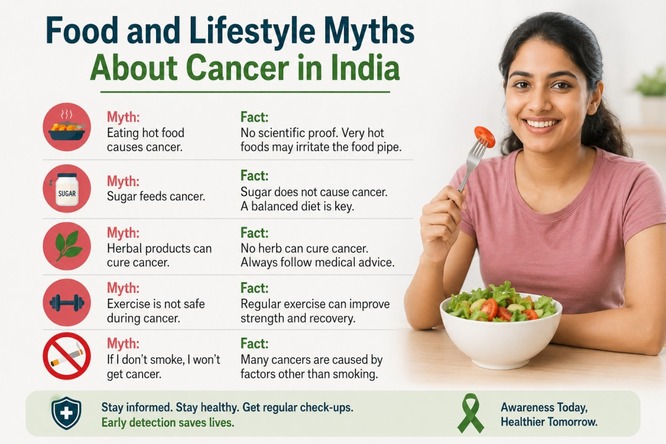
Introduction: Why Cancer Myths Are Common in India
In India, many people still believe myths and misinformation about cancer, especially regarding food habits, daily lifestyle, and cancer treatment. These myths are often shared through family discussions, social media, WhatsApp forwards, or incomplete online information. Because cancer creates fear and emotional stress in many households, people sometimes trust unverified advice instead of medically proven facts from a qualified Cancer Doctor.
According to Dr. Vikesh Shah, misinformation about cancer can sometimes become dangerous because it delays early diagnosis and proper medical treatment. Many patients change their entire diet without medical guidance, stop eating important foods, or depend only on home remedies instead of consulting a Cancer Specialist in Ahmedabad for professional advice.
The reality is that cancer is a complex medical condition influenced by multiple factors such as genetics, tobacco use, infections, environmental exposure, immunity, lifestyle habits, and overall health. No single food alone causes or cures cancer. Understanding the real connection between food, lifestyle, and cancer helps patients and families make informed decisions instead of believing fear-based myths.
Getting accurate information from an experienced Cancer Doctor is extremely important because early diagnosis, scientific treatment, and proper lifestyle support can improve overall health outcomes and quality of life for cancer patients.
How Food and Lifestyle Myths Create Fear and Confusion
When people hear different opinions from relatives, social media videos, or internet posts, they often become confused about what is true and what is false. This confusion increases fear around cancer.
Common questions people ask include:
- Does sugar cause cancer?
- Can certain foods cure cancer?
- Does stress directly create cancer?
- Can lifestyle changes alone stop cancer?
Many myths sound believable because they mix partial truth with incorrect information. However, medical decisions should always be based on scientific evidence and expert medical advice.
Myth: Sugar Directly Feeds Cancer
One of the most common myths is that eating sugar directly causes cancer growth.
Truth
All cells in the body, including healthy cells, use glucose for energy. Cancer cells also use glucose, but this does not mean sugar alone causes cancer.
Completely avoiding sugar will not “starve” cancer cells because the body naturally controls blood sugar levels in different ways.
However, excessive sugar intake over long periods may contribute to:
- obesity
- diabetes
- metabolic disorders
These conditions can increase the risk of certain cancers indirectly.
The real focus should be maintaining a balanced diet instead of extreme food restrictions.
Myth: Only Non-Vegetarian Food Causes Cancer
Some people believe cancer happens mainly because of eating meat or non-vegetarian food.
Truth
Cancer risk is influenced by multiple factors. While processed meat and excessive red meat consumption may increase the risk of some cancers, eating non-vegetarian food in moderation does not automatically cause cancer.
Cancer can affect vegetarians and non-vegetarians alike.
A healthy diet should focus on:
- balanced nutrition
- fresh fruits and vegetables
- protein intake
- fiber-rich foods
- limited processed foods
Myth: Microwave Food Causes Cancer
Many Indian families believe microwave ovens make food cancerous.
Truth
Microwave cooking uses non-ionizing radiation, which does not damage DNA like harmful radiation exposure.
Microwave ovens approved for household use are generally considered safe when used properly.
The larger concern is not the microwave itself but:
- overheating food repeatedly
- using unsafe plastic containers
- consuming heavily processed foods regularly
Myth: Plastic Containers Always Cause Cancer
People often assume all plastic instantly releases cancer-causing chemicals.
Truth
Certain low-quality plastics may release harmful substances when exposed to very high heat. However, not every plastic container is dangerous.
Using microwave-safe and food-grade containers reduces risk significantly.
Good habits include:
- avoiding damaged plastic containers
- limiting repeated heating
- preferring glass or steel for very hot foods
Myth: Cancer Can Be Cured Only Through Diet Changes
Some people believe strict diets alone can cure cancer completely.
Truth
Healthy nutrition supports the body, but cancer usually requires proper medical treatment such as:
- surgery
- chemotherapy
- radiation therapy
- immunotherapy
- targeted therapy
Diet changes alone cannot eliminate cancer.
Depending only on internet diets or alternative food plans may delay treatment and worsen the disease.
Myth: Herbal Remedies Alone Can Treat Cancer
In many Indian households, people first try herbal products or natural remedies before visiting a doctor.
Truth
Some natural ingredients may support overall health, but there is no scientific evidence that herbal remedies alone can cure most cancers.
Unverified products may:
- interfere with medical treatment
- damage liver or kidney function
- delay proper diagnosis
Patients should always discuss supplements or herbal products with their doctor.
Myth: Fasting Can Kill Cancer Cells
Social media often spreads claims that fasting can completely destroy cancer.
Truth
Research on fasting and cancer is still ongoing. While controlled nutrition strategies may sometimes support treatment under medical supervision, fasting alone cannot cure cancer.
Extreme fasting may weaken the body, reduce immunity, and create nutritional deficiencies during treatment.
Cancer patients need proper nutrition to maintain strength and recovery.
Myth: Organic Food Completely Prevents Cancer
Some people think eating only organic food guarantees protection from cancer.
Truth
Organic food may reduce exposure to certain pesticides, but no food can completely prevent cancer.
Cancer risk depends on many factors including:
- genetics
- smoking
- alcohol use
- obesity
- infections
- environmental exposure
- physical inactivity
Healthy lifestyle habits reduce risk, but no single food guarantees prevention.
Myth: Stress Alone Causes Cancer
Many people believe stress directly creates cancer.
Truth
Stress itself is not considered a direct cause of cancer. However, long-term stress may affect:
- sleep
- immunity
- eating habits
- overall health
Stress may indirectly influence lifestyle behaviors linked to cancer risk, but cancer development is much more complex.
Managing stress is still important for overall physical and emotional health.
Myth: Mobile Phones Always Cause Cancer
Fear about mobile phone radiation is very common.
Truth
Current scientific evidence has not confirmed that normal mobile phone use directly causes cancer.
Research is still ongoing, but there is no strong proof that everyday mobile usage alone creates cancer in humans.
Myth: Healthy People Never Get Cancer
Many people assume physically fit individuals cannot develop cancer.
Truth
Even healthy individuals can develop cancer due to:
- genetic mutations
- family history
- environmental exposure
- infections
- unknown biological factors
A healthy lifestyle reduces risk but cannot guarantee complete prevention.
The Real Connection Between Lifestyle and Cancer Risk
Although myths are dangerous, lifestyle does play a role in cancer prevention.
Medical research shows higher cancer risk is associated with:
- tobacco use
- heavy alcohol consumption
- obesity
- unhealthy diet
- lack of physical activity
- chronic infections
- environmental pollutants
Healthy lifestyle choices may reduce the risk of several cancers and improve overall well-being.
Foods That Support Overall Health During Cancer Care
During cancer treatment, nutrition becomes extremely important.
Doctors often recommend:
- protein-rich foods
- fresh fruits and vegetables
- adequate hydration
- whole grains
- healthy fats
Proper nutrition helps:
- maintain strength
- support recovery
- improve immunity
- reduce weakness during treatment
Diet plans should always be personalized according to the patient’s condition.
Importance of Balanced Nutrition During Cancer Treatment
Many patients suddenly stop eating important foods after diagnosis because of fear.
This can lead to:
- weakness
- weight loss
- poor immunity
- delayed recovery
Balanced nutrition supports the body during:
- chemotherapy
- surgery
- radiation therapy
- immunotherapy
Patients should avoid extreme diets without medical advice.
How Smoking, Alcohol, Obesity, and Inactivity Increase Cancer Risk
Unlike internet myths, some lifestyle risks are medically proven.
These include:
- tobacco smoking
- chewing tobacco
- excessive alcohol use
- obesity
- physical inactivity
These factors are strongly linked to cancers affecting:
- lungs
- mouth
- throat
- liver
- colon
- breast
Lifestyle improvement can reduce risk significantly.
Why Early Detection Matters More Than Internet Myths
Many people spend more time searching home remedies online than visiting a doctor.
Early diagnosis is far more important than following viral myths.
When cancer is detected early:
- treatment becomes more effective
- recovery chances improve
- complications reduce
- survival rates increase
Ignoring symptoms due to misinformation can delay life-saving treatment.
How Correct Information Helps Patients Make Better Decisions
Correct medical knowledge helps families:
- reduce fear
- avoid confusion
- seek treatment early
- understand treatment options clearly
Evidence-based guidance allows patients to make informed healthcare decisions instead of depending on social media myths.
Role of a Cancer Specialist in India in Patient Education
Cancer specialists help patients understand:
- real cancer risks
- proper screening
- treatment options
- side effect management
- lifestyle guidance during treatment
Medical consultation is important because every patient’s condition is different.
Why Families Should Avoid Self-Diagnosis Through Social Media
Social media videos and forwarded messages often spread inaccurate cancer information.
Not all online advice is medically verified.
Patients should avoid:
- self-diagnosis
- random supplement use
- stopping treatment without medical advice
Trusted healthcare professionals remain the safest source of medical guidance.
Understanding Evidence-Based Cancer Care
Modern cancer care is based on:
- scientific research
- clinical trials
- biomarker testing
- advanced imaging
- personalized treatment planning
This approach improves safety, treatment effectiveness, and patient outcomes.
How Awareness Can Reduce Fear Around Cancer
Awareness helps people:
- identify symptoms early
- understand real risk factors
- avoid myths
- seek treatment without fear
Open discussions about cancer can reduce stigma and improve early diagnosis in Indian families.
Food and lifestyle myths about cancer are very common in India, but believing incorrect information can create fear and delay proper treatment. Cancer is a complex medical condition influenced by many biological and lifestyle factors. While healthy habits are important, no single food, supplement, or home remedy can completely prevent or cure cancer.
The best approach is to follow evidence-based medical guidance, maintain a balanced lifestyle, and seek professional advice whenever symptoms appear. Early detection, proper treatment, and correct information remain the most powerful tools in improving cancer outcomes and saving lives.
For proper cancer evaluation, accurate guidance, and advanced treatment planning, consult Dr. Vikesh Shah. As an experienced Cancer Doctor, he focuses on evidence-based cancer care and personalized treatment approaches that help patients make informed decisions with confidence. Contact us today to schedule your consultation and receive expert support for your cancer care journey.