
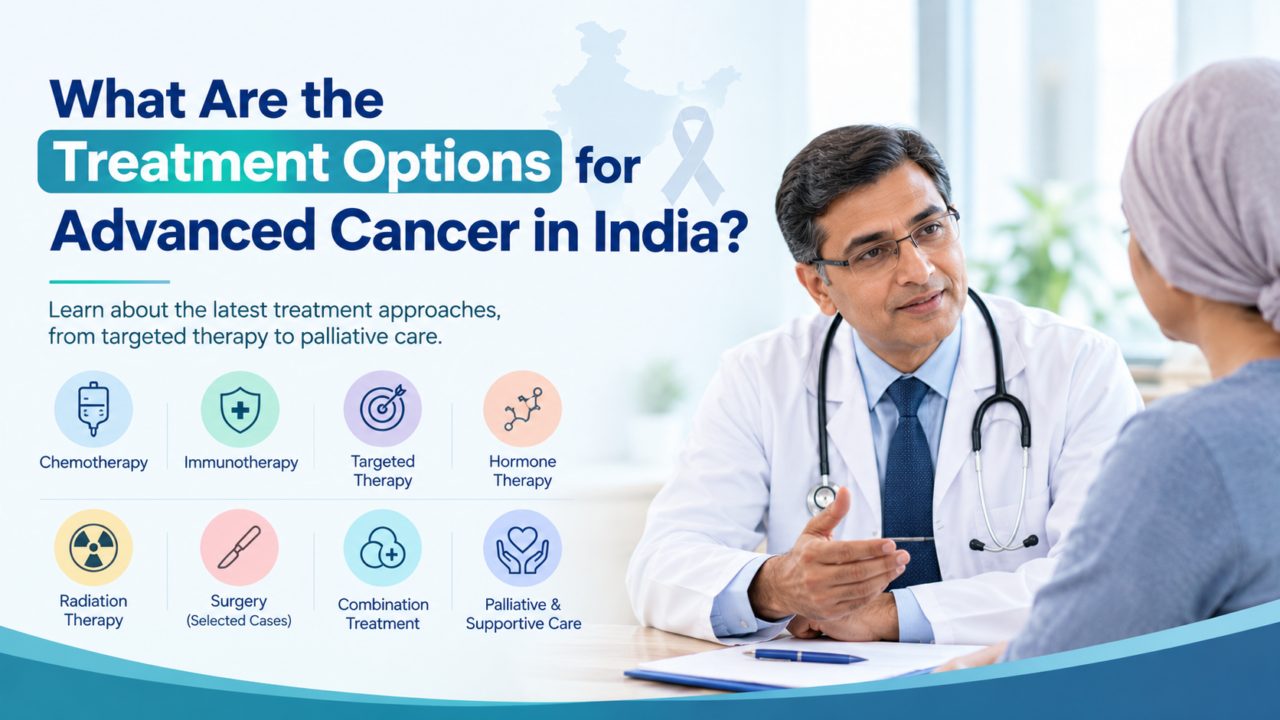
What Are the Treatment Options for Advanced Cancer in India?
Being diagnosed with advanced cancer can raise many questions for patients and their families: What treatment options are available? Can advanced cancer be controlled? What is the latest treatment? Where should treatment be taken?
Advanced cancer is a broad term. It may refer to cancer that has grown into nearby tissues or cancer that has spread to distant parts of the body. When cancer spreads to distant parts of the body, it is called metastatic cancer and is often referred to as stage 4 cancer. However, treatment and prognosis vary significantly according to the type of cancer, where it has spread, previous treatments, tumour characteristics and the person’s overall health.
For patients looking for advanced cancer treatment in Ahmedabad, understanding the available treatment approaches can help them discuss suitable options with a qualified cancer specialist.
What Is Advanced Cancer?
Advanced cancer does not describe one specific type of cancer.
It is generally used when cancer has become more difficult to treat, has spread to other parts of the body, or is unlikely to be cured with current treatment. However, some advanced cancers can be controlled for many years, and selected advanced cancers may have potentially curative treatment options.
When cancer spreads to a distant organ, the metastatic cancer keeps the characteristics of the original cancer.
For example, breast cancer that spreads to the lungs is called metastatic breast cancer, not lung cancer. The treatment is based on the original breast cancer and its characteristics.
What Are the Treatment Options for Advanced Cancer?
There is no single treatment that works for every advanced cancer.
Depending on the cancer type and individual situation, treatment may include:
- Chemotherapy
- Immunotherapy
- Targeted therapy
- Hormone therapy
- Radiation therapy
- Surgery in selected situations
- Combination treatments
- Clinical trials
- Palliative and supportive care
The National Cancer Institute notes that cancer treatment may involve one treatment or a combination of treatments, depending on the cancer type and how advanced it is.
1. Chemotherapy for Advanced Cancer
Chemotherapy uses medicines to kill cancer cells or slow their growth.
For advanced cancer, chemotherapy may be used to:
- Slow cancer growth
- Control metastatic disease
- Reduce tumour size
- Relieve symptoms caused by a tumour
- Treat cancer throughout the body
Whether chemotherapy is appropriate depends on the cancer type, where it has spread, previous treatment and the patient’s overall health.
Chemotherapy may sometimes be combined with other treatments.
2. Immunotherapy
Immunotherapy is a type of cancer treatment that helps the immune system recognise and fight cancer cells.
It has become an important treatment option for certain advanced cancers. However, immunotherapy is not suitable for every patient or every cancer.
Doctors may consider factors such as:
- Cancer type
- Tumour characteristics
- Biomarker results
- Previous treatments
- Overall health
The suitability of immunotherapy should therefore be determined by the treating cancer specialist.
3. Targeted Therapy
Targeted therapy focuses on specific changes in cancer cells that help them grow, divide or spread.Before using certain targeted treatments, doctors may recommend biomarker or molecular testing to determine whether the tumour contains a relevant target.This approach is an important part of personalised cancer care because the same treatment may not work for every patient.
4. Hormone Therapy
Some cancers use hormones such as oestrogen, progesterone or testosterone to grow.For selected hormone-sensitive cancers, hormone therapy can slow or stop cancer growth by blocking hormone activity or reducing hormone levels.It is commonly considered in certain breast and prostate cancers.
5. Radiation Therapy
Radiation therapy uses high-energy radiation to damage cancer cells.
In advanced cancer, radiation may be used to:
- Control a tumour in a specific location
- Relieve cancer-related pain
- Reduce pressure caused by a tumour
- Treat selected areas of metastatic disease
- Manage certain local complications
Radiation may be used alone or together with other cancer treatments depending on the patient’s condition.
6. Surgery for Advanced Cancer
Surgery is not appropriate for every patient with advanced or metastatic cancer.
However, selected patients may benefit from surgery depending on the location and extent of disease.
Surgery may sometimes be considered to:
- Remove a primary tumour
- Treat a limited area of metastatic disease
- Relieve an obstruction
- Control bleeding
- Reduce pressure caused by a tumour
- Manage another cancer-related complication
The purpose of surgery should be clearly explained by the treating cancer team because the treatment goal can differ from patient to patient.
7. Combination Cancer Treatment
Advanced cancer may sometimes require more than one treatment approach.
For example, depending on the cancer, a treatment plan may involve a combination of:
Systemic therapy + radiation therapy + surgery + supportive care
The exact combination depends on the cancer type, extent of disease, previous treatment and the patient’s overall condition.
Combination treatment should be planned by the appropriate multidisciplinary cancer team.
8. Clinical Trials for Advanced Cancer
Clinical trials investigate new cancer treatments, combinations or treatment approaches.
For some patients with advanced cancer, a clinical trial may provide access to an investigational treatment that is not yet routinely available.
However, eligibility depends on specific criteria such as:
- Cancer type
- Stage
- Previous treatments
- Biomarker or genetic findings
- Age
- Overall health
Patients should discuss clinical trial opportunities with their cancer specialist rather than assuming that every trial is suitable for them.
9. Palliative and Supportive Care
Palliative care is an important part of advanced cancer care.
Its purpose is to improve quality of life and help manage symptoms and treatment-related side effects. It can include support for physical, emotional, social and psychological concerns.
Symptoms that may be managed include:
- Cancer-related pain
- Fatigue
- Nausea and vomiting
- Loss of appetite
- Breathlessness
- Sleep problems
- Emotional distress
Importantly, palliative care does not automatically mean that cancer treatment has stopped. It can be provided alongside cancer-directed treatment.
How Do Doctors Choose Treatment for Advanced Cancer?
Treatment decisions are not based on cancer stage alone.
A cancer specialist may consider:
Cancer Type: Lung, breast, prostate, colorectal, pancreatic, and other cancers behave differently and have different treatment options.
Location of Spread: Doctors need to understand which organs or tissues are affected and how extensive the spread is.
Pathology: The biopsy and pathology report help establish the cancer type and important characteristics.
Biomarkers and Molecular Testing: Some cancers have specific molecular changes that can help guide treatment selection.
Previous Treatment: Previous chemotherapy, radiation, surgery, immunotherapy, or targeted treatment can influence the next treatment choice.
Overall Health: Age, physical condition, other medical conditions, and the ability to tolerate treatment are also considered.
Treatment Goals: Treatment may focus on controlling the cancer, reducing symptoms, improving quality of life, prolonging survival, or—in selected situations—attempting long-term disease control or cure.
NCI recommends discussing the goal of treatment, available options, possible side effects, and clinical trials with the cancer care team.
What Tests May Be Needed Before Advanced Cancer Treatment?
Before starting or changing treatment, doctors may recommend investigations based on the cancer type.
These may include:
- Biopsy and pathology
- Blood tests
- CT scan
- MRI
- PET-CT
- Ultrasound
- Molecular testing
- Biomarker testing
- Other cancer-specific investigations
Not every patient needs every test. The appropriate evaluation depends on the diagnosis and clinical situation.
Advanced Cancer Treatment in Ahmedabad: What Should Patients Expect?
Patients searching for advanced cancer treatment in Ahmedabad should understand that treatment is not selected only on the basis of the term “advanced cancer.”
A cancer specialist may first review:
- The original cancer diagnosis
- Pathology and biopsy reports
- Imaging reports
- Extent of cancer spread
- Previous treatment
- Biomarker or molecular test results
- Current symptoms
- Overall health
- Treatment goals
After reviewing these factors, the medical team can discuss the treatment options that may be appropriate.
This approach is important because two patients with “stage 4 cancer” may have very different diagnoses and therefore completely different treatment plans.
Can Advanced Cancer Be Controlled?
In many situations, advanced or metastatic cancer can be treated even when it cannot be completely cured.
NCI states that treatments are available for most types of metastatic cancer. The goal is often to stop or slow cancer growth, while other treatments may focus on relieving symptoms and improving quality of life. Some people can live for years when metastatic cancer is well controlled.
However, response to treatment varies from person to person.
Therefore, patients should avoid relying on a single survival percentage or general statement about life expectancy without discussing their individual diagnosis with their cancer specialist.
What Is the Role of Palliative Care in Advanced Cancer?
Palliative care can be introduced at different points during cancer care.
It can help address:
- Pain and other physical symptoms
- Treatment side effects
- Emotional concerns
- Family and caregiver needs
- Communication about treatment goals
- Quality-of-life concerns
Palliative care can be given together with cancer treatment. It is not restricted to the final stage of life.
Questions to Ask Your Cancer Specialist
If you or a family member has advanced cancer, consider asking:
- What type of cancer do I have?
- Where has the cancer spread?
- What is the goal of treatment?
- What treatment options are available?
- Do I need biomarker or molecular testing?
- What are the potential benefits and side effects?
- How will we know whether treatment is working?
- Are there clinical trials that may be relevant?
- Should palliative care be included in my treatment?
- Would a second opinion be useful?
Having these discussions can help patients understand their options and make informed decisions with their medical team.
FAQs About Advanced Cancer Treatment
What is the best treatment for advanced cancer?
There is no single best treatment for all advanced cancers. The appropriate treatment depends on the cancer type, extent of spread, tumour characteristics, previous treatment and overall health.
Can advanced cancer be treated?
Yes. Many advanced cancers have treatment options. Depending on the cancer, treatment may aim to control or slow the disease, reduce symptoms, improve quality of life or, in selected cases, achieve long-term disease control or cure.
Is stage 4 cancer the same as advanced cancer?
Not always. “Advanced cancer” is a broad term. Many metastatic cancers are stage 4, but the terminology and staging systems can differ depending on the type of cancer.
Is immunotherapy available for advanced cancer?
Immunotherapy is an option for selected cancers and patients. Its suitability depends on the cancer type and individual tumour characteristics.
Is chemotherapy still used for advanced cancer?
Yes. Chemotherapy remains an important treatment for many cancers, including some advanced cancers. It may be used alone or in combination with other treatments depending on the diagnosis.
Can palliative care be given with cancer treatment?
Yes. Palliative care can be provided alongside cancer-directed treatment to help manage symptoms and improve quality of life.
Should I get a second opinion for advanced cancer?
A second opinion can be useful when a diagnosis or treatment plan is complex, when several treatment options are being considered, or when you want another specialist’s assessment.
Where can I seek advanced cancer treatment in Ahmedabad?
Patients looking for advanced cancer treatment in Ahmedabad should consult a qualified cancer specialist who can review their pathology, imaging, cancer stage, biomarker results, previous treatments and overall health before discussing treatment options.
Conclusion
Advanced cancer can be challenging to treat, but it does not mean that there are no treatment options.
Depending on the diagnosis, treatment may include chemotherapy, immunotherapy, targeted therapy, hormone therapy, radiation therapy, selected surgery, combination treatment, clinical trials and palliative care.
The right treatment depends on the individual cancer rather than the stage alone. For patients searching for advanced cancer treatment in Ahmedabad, a detailed evaluation by a qualified cancer specialist is an important step toward understanding the available treatment options and their potential goals.
Treatment decisions should always be made after discussing the diagnosis, expected benefits, possible risks and alternatives with the treating cancer team.
Looking for Advanced Cancer Treatment in Ahmedabad?
Discuss your diagnosis and available treatment options with Dr. Vikesh Shah to understand which approaches may be appropriate for your condition. Book a Consultation Today to take the next step toward an individualised cancer treatment plan based on your medical needs.