
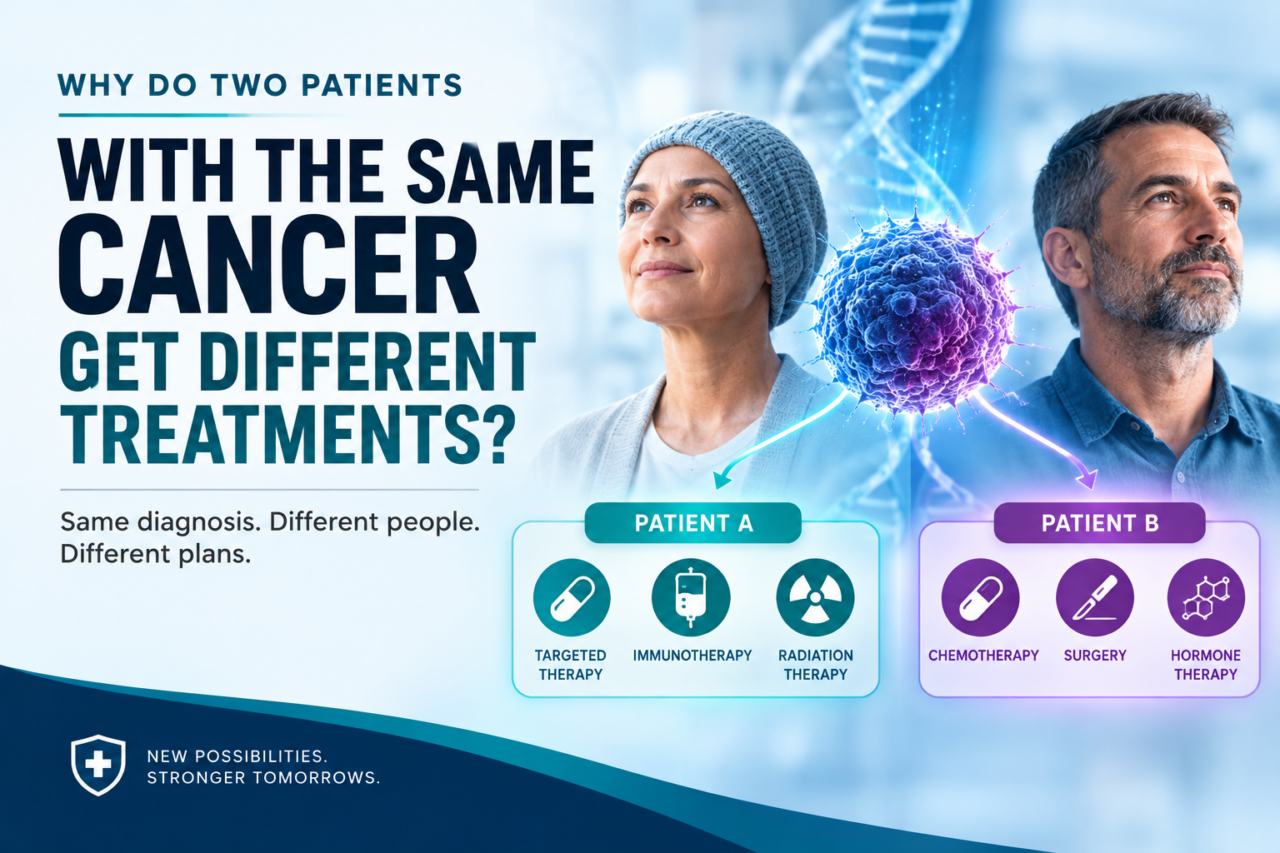
Personalized Cancer Treatment in India is important because no two cancer patients are exactly alike, even when they have the same type of cancer. Factors such as the cancer stage, biomarkers, overall health, previous treatments, and treatment goals can influence the approach. Dr. Vikesh Shah focuses on understanding these individual factors to help patients make informed decisions about their cancer care. From evaluating treatment options to considering therapies such as immunotherapy when appropriate, the goal is to create a treatment plan based on the patient’s specific situation rather than following a one-size-fits-all approach.
Isn’t the Same Cancer Supposed to Have the Same Treatment?
Not necessarily. Two patients may have the same type of cancer, but their cancers can behave differently and respond differently to treatment. A treatment that is appropriate for one patient may not provide the same benefit to another.
Doctors therefore look beyond the cancer’s name. They consider factors such as where the cancer started, how far it has spread, its biological characteristics, the patient’s overall health, and any previous treatment. This helps the medical team select an approach that is appropriate for that individual patient.
Cancer Type Is Only the Beginning
Knowing the cancer type is an important first step, but it does not provide the complete picture. For example, two people may both have lung cancer, breast cancer, or colorectal cancer, yet their treatment plans may be very different.The specific subtype, characteristics of the tumour, stage of disease, and other clinical findings can influence whether surgery, radiation therapy, chemotherapy, targeted therapy, immunotherapy, or a combination of treatments may be considered.
How Cancer Stage Changes the Treatment Plan
Cancer stage describes factors such as the size of the tumour and whether the cancer has spread to nearby lymph nodes or other parts of the body. It can significantly influence treatment decisions.For some patients with localized cancer, surgery or radiation may be an important part of treatment. When cancer has spread, treatment may focus more on controlling the disease, reducing symptoms, slowing progression, and maintaining quality of life. The appropriate approach depends on the individual cancer and the patient’s circumstances.
Why Cancer Biomarkers and Molecular Tests Matter
Cancer cells can carry specific biological changes that help doctors understand how a tumour may behave and whether certain treatments could be useful.
Depending on the cancer type, doctors may recommend biomarker or molecular testing before selecting certain treatments. Findings such as specific gene changes, protein expression, or other tumour characteristics can sometimes help identify patients who may benefit from targeted therapy or immunotherapy.
This is one reason why two patients with the same cancer diagnosis may receive different treatment recommendations.
How Age and Overall Health Influence Treatment Choices
Treatment decisions are not based only on the tumour. A patient’s age, general health, organ function, existing medical conditions, nutritional status, and ability to tolerate treatment can also matter.
For example, two patients with the same stage of cancer may have different treatment plans if their overall health or ability to tolerate intensive treatment differs. Doctors weigh potential benefits against possible risks when developing an appropriate treatment strategy.
Why Previous Cancer Treatment Can Change the Next Step
Previous treatment history can also influence what comes next. Doctors may consider which treatments a patient has already received, how the cancer responded, how long the response lasted, and whether the disease has returned or progressed.This information helps the oncology team determine whether continuing, changing, combining, or moving to another treatment approach should be considered.
Chemotherapy, Immunotherapy, Targeted Therapy or Surgery: How Do Doctors Decide?
There is no single treatment that works for every cancer or every patient. Depending on the diagnosis, doctors may consider surgery, chemotherapy, radiation therapy, immunotherapy, targeted therapy, hormone therapy, or combinations of these approaches.
The decision depends on the cancer type and stage, tumour characteristics, biomarkers, previous treatment, overall health, and treatment goals. In some situations, combining different treatment approaches may provide a better strategy than using one treatment alone.
Why One Patient May Benefit From Immunotherapy and Another May Not
Immunotherapy does not work equally well for every patient or every cancer. Its potential benefit depends on factors such as the cancer type, stage, biomarkers, previous treatments, and the patient’s overall condition.Before recommending immunotherapy, doctors may evaluate whether there is a reasonable clinical basis for using it. This can help avoid assuming that a treatment is suitable simply because it has helped another patient with a similar diagnosis.
The Role of Personalized Cancer Treatment
Personalized care means looking at the individual patient and their cancer together. Instead of choosing treatment based only on the cancer’s name, doctors consider clinical findings, pathology, imaging, biomarkers, previous treatment, overall health, and the patient’s goals.This approach helps the oncology team make more informed treatment decisions and explain why a particular option may be recommended.
Why Treatment Plans Can Change During Cancer Care
A cancer treatment plan is not always fixed from the beginning. Doctors may reassess the patient during treatment using symptoms, examination findings, blood tests, imaging, pathology, or other relevant assessments.If the cancer responds, progresses, or causes unexpected side effects, the treatment strategy may need to be reconsidered. Adjusting treatment does not necessarily mean the original plan was wrong; cancer care often requires ongoing assessment and decision-making.
Can the Same Treatment Work Differently in Two Patients?
Yes. Patients can respond differently to the same treatment. Differences in tumour biology, biomarkers, overall health, metabolism, previous treatments, and other factors can influence both effectiveness and side effects.That is why another patient’s treatment experience should not be used as a guarantee of what will happen in your own case. Your oncology team should assess your specific diagnosis and circumstances before recommending treatment.
How a Cancer Specialist Builds an Individual Treatment Plan
A cancer specialist brings together information from pathology reports, imaging, clinical examination, medical history, previous treatments, and relevant laboratory or biomarker testing.The aim is to understand the disease as completely as possible before recommending the next step. Patients should also feel comfortable asking why a particular treatment is being suggested, what its potential benefits and risks are, and whether other reasonable options exist.
Dr. Vikesh Shah’s Approach to Personalized Cancer Care
Dr. Vikesh Shah focuses on understanding the patient’s cancer and individual clinical situation before discussing appropriate treatment options. His approach emphasizes informed decision-making rather than assuming that one treatment will work for everyone.For patients considering advanced cancer therapies such as immunotherapy, factors including cancer type, disease stage, relevant biomarkers, previous treatment, and overall health can help determine whether a particular treatment may be appropriate.
Final Thoughts: Cancer Treatment Is Not One-Size-Fits-All
Having the same cancer diagnosis does not mean that every patient needs the same treatment. Cancer can differ from one person to another, and so can the patient’s health, previous treatment history, biomarkers, and treatment goals.Understanding these differences is an important part of making thoughtful cancer treatment decisions. If you or a family member has recently received a cancer diagnosis, discussing the available options with a qualified cancer specialist can help you understand the next steps more clearly.
Frequently Asked Questions
- Why do cancer patients with the same diagnosis receive different treatments?
Because treatment depends on factors such as cancer stage, tumour characteristics, biomarkers, previous treatment, overall health, and individual treatment goals. - Does cancer stage affect treatment choices?
Yes. The extent of cancer spread can significantly influence whether surgery, radiation, systemic treatment, or a combination of approaches is considered. - Do all cancer patients need chemotherapy?
No. Chemotherapy is one of several cancer treatment options. Whether it is appropriate depends on the specific cancer and individual clinical factors. - Is immunotherapy suitable for every cancer patient?
No. Its suitability depends on factors including cancer type, stage, biomarkers, previous treatment, and overall health. - Why are biomarker tests important in cancer treatment?
Certain biomarkers can provide information about tumour biology and may help doctors determine whether specific targeted therapies or immunotherapies could be appropriate. - Can a cancer treatment plan change after treatment begins?
Yes. Doctors may reassess the disease and the patient’s response during treatment and modify the plan when clinically appropriate. - How can I understand which cancer treatment is right for me?
Discuss your pathology, imaging, stage, biomarker results, previous treatments, and overall health with your oncology team. They can explain which options may be appropriate for your specific situation.