
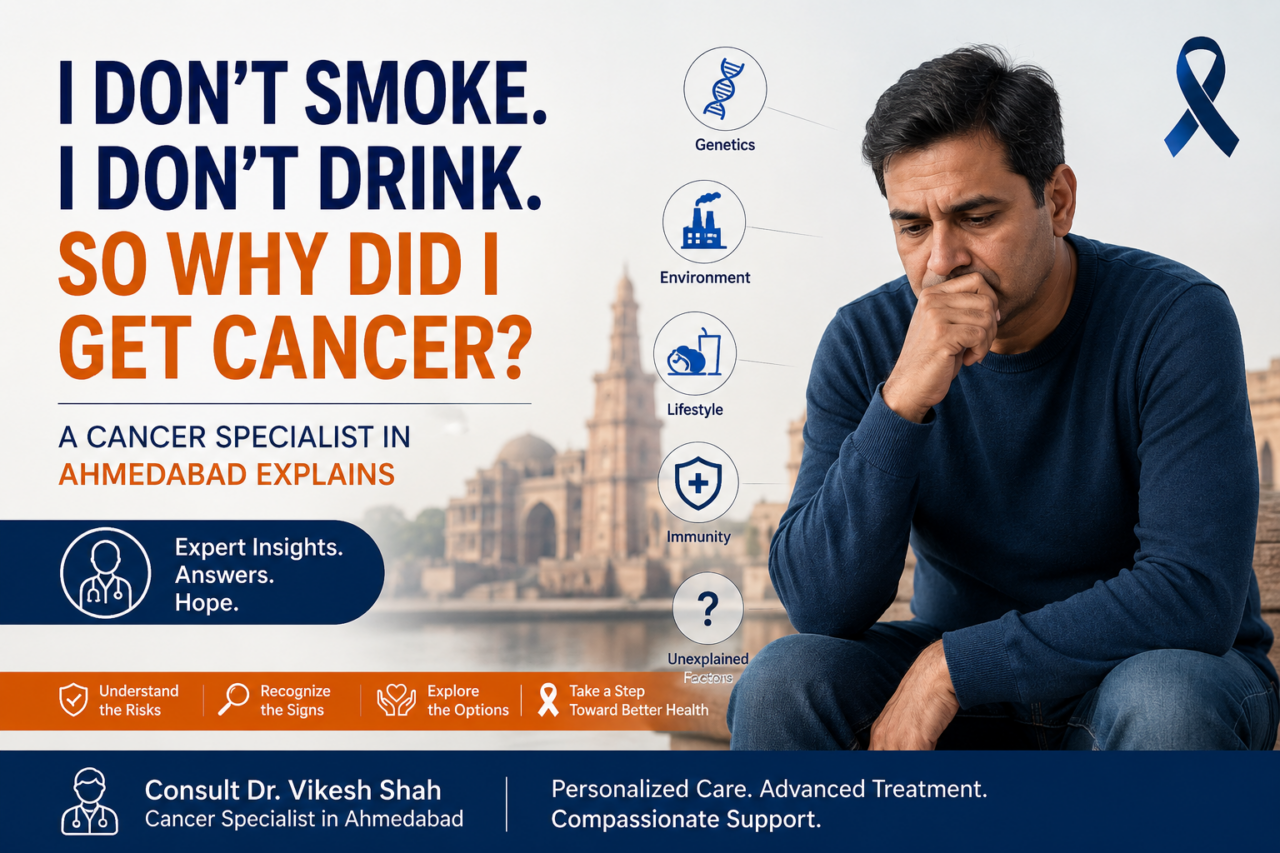
“But I Did Everything Right…” — A Question Many Patients Ask
One of the most common reactions after a cancer diagnosis sounds something like this:
“But I don’t smoke.”
“I’ve never touched alcohol.”
“I exercise regularly.”
“There’s no cancer in my family.”
“How did this happen to me?”
As a Cancer Specialist in India , this is a question I hear from patients and families far more often than most people realize.
For decades, many of us grew up believing that cancer only affects smokers, heavy drinkers, or people with a strong family history of the disease. While these factors certainly increase risk, the reality is far more complex.
Today, many cancer patients have never smoked a cigarette, never consumed alcohol, and have no known family history of cancer.
So why does cancer still happen?
The answer lies in understanding how cancer develops, how modern lifestyles have changed our risk profile, and why no single factor can fully explain who gets cancer and who doesn’t.
The Biggest Cancer Myth: Only Smokers and Drinkers Get Cancer
Smoking remains one of the leading causes of cancer worldwide. Alcohol also contributes to several cancer types.
However, cancer is not a disease that affects only smokers and drinkers.
Every year, thousands of people are diagnosed with cancers despite living what most would consider a healthy lifestyle.
We now see increasing numbers of:
- Breast cancer patients who never smoked
- Colon cancer patients in their 30s and 40s
- Lung cancer patients who have never touched tobacco
- Thyroid cancer patients with no obvious risk factors
- Oral cancer patients without traditional smoking histories
The reality is simple:
Smoking and alcohol increase cancer risk, but they are not the only causes of cancer.
Understanding How Cancer Actually Develops
Cancer begins when cells develop genetic changes that cause them to grow uncontrollably.
Your body contains trillions of cells.
Every day, these cells divide, repair themselves, and perform countless functions necessary for life.
Most of the time, the body corrects mistakes automatically.
Sometimes, however, mutations accumulate.
Over time, these mutations can allow abnormal cells to survive, multiply, and eventually form a tumour.
This process often takes years or even decades.
Cancer is rarely caused by a single event.
Instead, it is usually the result of multiple factors working together over time.
When Genetics Matter — And When They Don’t
Many people believe cancer is always hereditary, but inherited cancers account for only a small percentage of all cancer cases. Certain gene mutations, such as BRCA1 and BRCA2, can increase the risk of developing specific cancers. However, most people diagnosed with cancer do not have an inherited cancer-causing mutation. Having a genetic mutation may increase risk, but it does not guarantee a cancer diagnosis. Similarly, having no family history does not mean a person is completely protected. Genetics play an important role, but they are only one factor among many that can influence cancer development.
Why Many Cancer Patients Have No Family History
One of the biggest surprises for patients is learning that most cancers occur in people with no family history at all.
This happens because most cancers are what doctors call sporadic cancers.
These cancers develop due to genetic changes that occur during a person’s lifetime rather than being inherited from parents.
Ageing, environmental exposures, lifestyle habits, chronic inflammation, and simple biological chance can all contribute to these changes.
This is why someone can have:
- No family history
- No smoking history
- No alcohol use
and still develop cancer.
Hidden Risk Factors Most People Never Think About
Many cancer risks are not as obvious as cigarettes or alcohol.
Modern life exposes us to factors that may quietly influence our long-term health.
Air Pollution
Air pollution has become a major public health concern worldwide.
Long-term exposure to polluted air has been associated with increased cancer risk, particularly lung cancer.
Many people underestimate how much time they spend breathing polluted air during commuting, work, and daily activities.
Ultra-Processed Foods
Modern diets often include highly processed foods that contain excess sugar, unhealthy fats, preservatives, and additives.
While no single food causes cancer, long-term dietary patterns influence overall health and cancer risk.
Obesity and Physical Inactivity
Being physically inactive can contribute to chronic inflammation, hormonal changes, and metabolic dysfunction.
Research has linked obesity to several cancers, including breast, colorectal, kidney, and endometrial cancers.
Chronic Stress and Poor Sleep
Stress itself is not considered a direct cause of cancer.
However, long-term stress and inadequate sleep can affect immune function, hormonal balance, and overall health.
Environmental Exposures
Pesticides, industrial chemicals, workplace exposures, and other environmental factors may contribute to cancer risk over time.
Many of these exposures occur without people even realizing it.
Can Healthy and Fit People Still Get Cancer?
Healthy lifestyle habits can significantly reduce cancer risk, but they cannot eliminate it completely. Regular exercise, a balanced diet, maintaining a healthy weight, and avoiding tobacco all support long-term health and lower the chances of developing many cancers. However, cancer can still occur due to factors such as genetics, ageing, environmental exposures, infections, and other biological changes that may be beyond an individual’s control. This is why even athletes, fitness enthusiasts, and health-conscious individuals can sometimes receive a cancer diagnosis despite following healthy habits.
Why Cancer Is Increasing Among Younger Adults
One of the most concerning trends in modern oncology is the rise of cancer among younger adults.
Doctors around the world are seeing increasing cases of:
- Colon cancer
- Breast cancer
- Thyroid cancer
- Kidney cancer
in patients under 50.
Researchers are still working to fully understand why this is happening.
Possible contributing factors include:
- Lifestyle changes
- Dietary patterns
- Environmental exposures
- Obesity
- Sedentary behaviour
- Changes in gut health
The important takeaway is that cancer is no longer considered exclusively a disease of old age.
The Role of the Immune System in Cancer Prevention
Your immune system plays an important role in protecting the body from cancer. It constantly monitors for abnormal cells and often destroys them before they become harmful. This natural defense process, known as immune surveillance, helps prevent many potential cancers from developing. Understanding how the immune system detects and fights abnormal cells has become one of the most important areas of modern cancer research.
How Cancer Cells Hide from the Body’s Natural Defences
One of the most fascinating discoveries in modern cancer research is that cancer cells can sometimes avoid detection by the immune system. Normally, the immune system continuously searches for abnormal cells and destroys them before they become harmful. However, certain cancer cells develop mechanisms that allow them to hide from immune surveillance, helping them survive and continue growing within the body.
Researchers have found that some cancer cells can send signals that suppress immune activity or make themselves appear similar to healthy cells. As a result, the immune system may fail to recognize them as a threat. This understanding has transformed cancer care and contributed to the development of advanced treatments such as Immunotherapy Cancer Treatment in Ahmedabad and worldwide. Instead of directly attacking cancer cells, immunotherapy works by helping the immune system identify, target, and destroy cancer cells more effectively, offering new possibilities for patients with various types of cancer.
Early Warning Signs You Should Never Ignore
Many cancers are easier to treat when detected early.
Symptoms vary depending on the type of cancer, but some warning signs deserve medical attention:
- Unexplained weight loss
- Persistent fatigue
- A lump or swelling
- Unusual bleeding
- Persistent cough
- Changes in bowel habits
- Difficulty swallowing
- Persistent pain
- Changes in moles or skin lesions
These symptoms do not automatically mean cancer.
However, they should never be ignored.
What Modern Cancer Treatment Has Taught Us About Cancer Risk
Modern cancer treatment has shown that cancer does not always follow predictable patterns. Some people with very few known risk factors develop cancer, while others with multiple risk factors may never experience it. This highlights why awareness, prevention, regular screening, and early diagnosis are so important. As cancer research continues to advance, doctors are gaining a deeper understanding of cancer biology, helping improve both risk assessment and treatment outcomes.
Why Early Detection Still Saves More Lives Than Any Treatment
No matter how advanced treatment becomes, early detection remains one of the most powerful tools in cancer care.
When cancer is found early:
- More treatment options are available
- Outcomes are often better
- Treatment may be less intensive
- Survival rates generally improve
Regular health check-ups and appropriate screening play a critical role in protecting long-term health.
Can Cancer Be Prevented Completely?
No.
There is currently no guaranteed way to prevent every cancer.
However, you can significantly reduce your risk by:
- Avoiding tobacco
- Maintaining a healthy weight
- Exercising regularly
- Eating a balanced diet
- Limiting alcohol consumption
- Prioritizing sleep
- Managing stress
- Attending regular health screenings
Risk reduction is not the same as risk elimination.
But every positive step matters.
What You Can Do Today to Lower Your Risk
Small changes made consistently over time often have the greatest impact.
Consider:
- Walking daily
- Eating more whole foods
- Sleeping 7–8 hours each night
- Staying physically active
- Avoiding tobacco products
- Staying informed about cancer screening recommendations
- Consulting a doctor if symptoms persist
Your future health is shaped by the habits you build today.
When Should You Speak to a Cancer Specialist?
You should consider speaking with a specialist if:
- You have persistent unexplained symptoms
- You notice unusual changes in your body
- You have a strong family history of cancer
- You want guidance regarding cancer screening
- You have concerns about your personal cancer risk
Early consultation can provide clarity, reassurance, and timely intervention when needed.
Insights from a Cancer Specialist in Ahmedabad
According to Dr. Vikesh Shah, a Cancer Specialist in Ahmedabad, one of the most important messages for patients and families is that cancer should never be viewed as a punishment or the result of a single mistake. Many patients feel guilty after a diagnosis and spend time wondering what they could have done differently. However, cancer is a highly complex disease influenced by a combination of factors, including genetics, environmental exposures, lifestyle habits, age, immune system function, and biological processes that medical science is still working to fully understand.
Rather than focusing on blame, patients should focus on what can be controlled. Early recognition of symptoms, regular health check-ups, timely screening, and access to appropriate medical care can make a significant difference in outcomes. The goal is not to dwell on why cancer occurred but to take informed steps toward diagnosis, treatment, and recovery. With greater awareness, evidence-based treatment, and the guidance of an experienced specialist, many patients can approach their cancer journey with greater confidence and hope.
Final Thoughts: Cancer Doesn’t Always Follow the Rules
Many people believe that cancer only affects those with unhealthy habits, but the reality is more complex. A person can maintain a healthy lifestyle, avoid smoking and alcohol, exercise regularly, and still develop cancer. While lifestyle choices play an important role in reducing risk, factors such as genetics, environmental exposure, infections, age, and other biological processes can also contribute to cancer development.
This is why cancer prevention is not only about living healthy but also about staying informed and paying attention to changes in your body. Understanding potential risk factors, recognizing warning signs, and seeking timely medical advice can help detect cancer at an earlier stage when treatment is often more effective. Healthy habits remain one of the best investments in long-term health, but awareness and early detection are equally important. When it comes to cancer, accurate information empowers people to make better decisions, take timely action, and prioritize their health with confidence.
If you have concerns about cancer symptoms, risk factors, screening, or treatment options, consulting an experienced specialist can help you make informed decisions. Dr. Vikesh Shah provides personalized cancer evaluation, diagnosis, and advanced treatment guidance to help patients receive timely and appropriate care. Schedule a consultation today to discuss your concerns and take a proactive step toward better health.